
Winter Battery Readiness for Edmonton Drivers | Freedom Ford
Winter Battery Readiness for Edmonton Drivers | Freedom Ford
Posted on September 25, 2026
Cold-Weather Battery Readiness for Edmonton Drivers
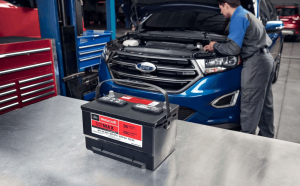
An automotive battery can appear dependable throughout summer and then struggle on Edmonton’s first truly cold morning. Low temperatures reduce the battery’s ability to deliver power at the same time the engine may require more effort to start and accessories such as the heater, defroster, lights, and heated seats place greater demand on the electrical system.
A fall battery inspection provides an opportunity to identify a weakening battery, dirty connections, or charging-system concerns before cold weather turns them into a no-start situation.
Battery Charge and Battery Health Are Not the Same
Two related measurements help explain whether a battery is ready for winter:
- State of charge describes how much electrical energy the battery currently holds.
- Battery capacity or health describes how effectively it can store and deliver power compared with when it was new.
A battery may be temporarily low because the vehicle has been parked or driven only on short trips. Charging it may restore its state of charge. A battery that has lost capacity through age, internal wear, or damage may test weak again even after it has been charged.
That distinction is why a professional battery test is more informative than simply checking whether the vehicle starts today.
Why Edmonton Winters Are Demanding on a 12-Volt Battery
Cold-weather starting brings several demands together. Chemical activity inside a conventional 12-volt battery slows as temperatures fall, reducing available output. Engine fluids are colder, starting resistance can increase, and drivers often activate several electrical features immediately.
The result is a smaller margin between the power the battery can supply and the power the vehicle needs. A battery that was already near the end of its useful service life may reveal that weakness during a cold snap.
Warning Signs That Deserve Attention
Battery and charging concerns can have several causes, so symptoms should be inspected rather than diagnosed from a distance. Common signs include:
- The engine cranks more slowly than usual.
- Interior or exterior lights appear unusually dim during startup.
- Electrical features behave inconsistently.
- A battery or charging-system warning appears.
- Corrosion is visible around a battery terminal.
- The vehicle repeatedly needs a boost.
A warning light can indicate more than a weak battery. Alternator output, wiring, terminals, sensors, and other electrical components may also be involved. Repeatedly boosting the vehicle without testing the system can leave the underlying problem unresolved.
How Short Trips Can Leave a Battery Undercharged
Starting a vehicle uses a meaningful amount of electrical energy. The charging system replenishes that energy while the engine is operating, but repeated short trips may not provide enough time to restore the battery fully, particularly when lights, fans, window defrosters, and heated accessories are running.
Drivers who make frequent short urban trips should pay particular attention to slower starting or other changes in electrical behaviour. Extended idling is not a substitute for correct diagnosis, maintenance, or an appropriate charging strategy.
What a Cold-Weather Battery Check Should Cover
A useful winter-readiness inspection may include:
- Battery state of charge and available starting capacity
- Battery age, condition, and correct application for the vehicle
- Terminal tightness and signs of corrosion
- Charging-system performance
- Visible cable or connection concerns
- Relevant stored faults or warning indicators
The appropriate testing procedure depends on the vehicle. Conventional gasoline models, hybrids, and electric vehicles use different electrical architectures, even though each may still rely on a 12-volt system for important vehicle functions.
Simple Habits That Support Winter Reliability
- Have the battery tested before severe cold arrives. Testing is more useful before a no-start event than after one.
- Keep the battery area clean and secure. Loose or corroded connections can interfere with electrical performance.
- Pay attention to changing startup behaviour. A gradual slowdown is easier to address while the vehicle still starts.
- Use the correct boost procedure. Consult the owner’s manual because connection points and procedures vary.
- Investigate repeated battery discharge. Multiple boosts may point to a weak battery, charging issue, parasitic draw, or usage pattern that needs attention.
Prepare Your Ford for an Edmonton Winter
Battery testing is one part of a complete cold-weather plan. Tires, brakes, fluids, wipers, lighting, heating, and defrosting systems also affect winter confidence.
Our technicians can inspect your vehicle and explain the results before recommending any repair or replacement. Visit our Freedom Ford service centre to arrange a battery or seasonal inspection and prepare for the months ahead.